Ballroom Dancing Lessons in Orange County California
Mambo Dance Lessons
Dynamic and exciting, the Mambo is a lively dance with infectious rhythms.
Your Perfect Ballroom Dance Starts Here
What is the Mambo Dance?
The Mambo is one of the most vivacious of all the Latin dancing styles. It is characterized by strong hip movements, rhythmical body actions, quick footwork and unique arm wraps and turns.
History of the Mambo Dance
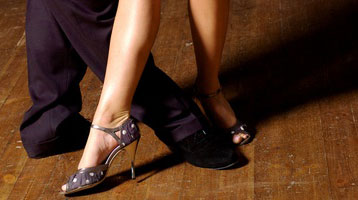
Mambo is one of the Latin ballroom dances, which originated in Cuba. It is characterized by the exciting energy and enticing rhythms, which draws eyes and allows for a lot of fun for the dancers. Additionally, the Mambo is flirty and sensual.
It originated in the areas of Haitian settlements in Cuba. Many sources claim that the dance was named after Haitian voodoo priests (called “Mambo”) who served the villagers as healers and spiritual advisors. Mambo was also a word used for their drums that were used in rituals. Other sources say that the word was used to mean “shake it” or “a conversation with the Gods.”
The beginning of the Mambo occurred from music that was not even really intended for dancing. The music had roots in English and French music. It was music for music’s sake and was not for the purposes of dancing. While this type of music did have the possibility of being danced to, no dance had been created at the time that would match the beats. While originating in Cuba, the conductor of an orchestra would shout “give it mambo,” to signify the beginning of the orchestra to improvise their music.
Perez Prado came up with the dance steps for the Mambo in 1940. Perez introduced the dance at the La Tropicana nightclub in Havana in 1943. He then became the first person to sell his music with the label of “Mambo.” Following Cuba, Prado brought his talents to Mexico where the dance and music was adopted, but was later banned by the Mexican government for promoting a non-traditional dancing style. It was during the introduction of the Mambo to Mexico that Perez Prado was deemed the King of Mambo. The first version of the Mambo was known for the freedom of movement and the complex footwork. In fact, some of the first versions of the Mambo are said to have so many wild acrobatic movements that they were unable to be performed by dancers who were not professional.
After the introduction of Swing influences into Prado’s music, the Mambo inevitably reached the United States in New York’s Plaza Ballroom. A blend of American Jazz (Swing music) and Cuban music produced the energetic rhythms of this musical style. This was the location and favorite hangout of dancers from Harlem. In 1947, the Mambo was really getting people excited in many renowned venues. Versions of the dance were penetrating dance studios, resort hotels, and at nightclubs in both New York and Miami. The following was so incredible that those who were big fans of the Mambo adopted their label as, “Mambonicks.” It gained wide spread popularity in the United States in the 1950s and 1960s.
At the age of 15, Fox was pushed to support himself and joined a circus for a short tour. For a brief time he also played professional baseball. Fox’s career developed further in San Francisco when a music publisher hired Fox to sing songs from the boxes of vaudeville theaters. In 1904, he appeared in a comedy titled “Mr. Frisky of Frisco” at the Belvedere Theatre. After San Francisco’s 1906 earthquake, Fox moved Eastward and landed in New York.
As Fox was getting his bearings on the East Coast, ragtime was born in 1910 and embraced across the United States. The dance was very different from previously popular and smoother ballroom waltz styles. Ragtime included partners dancing in a closer hold and improvising within the dances. Playful moves such as the kangaroo hop and turkey trop characterized this new dance style.
In 1914, Fox took the stage with his company of “American Beauties” in a New York theatre. Their dancing act was featured in between shows at the world’s largest movie house. One of their dancing acts included Henry trotting to ragtime music. The comical act was a hit and Fox’s “Trot” became popular in dance studios and dancing halls. It is believed that audiences tried to emulate Henry’s style of dance and called it “Fox’s trot.” In addition to this New York theater performance, the foxtrot gained momentum in the Jarin de Danse, which hosted a nightly revue.
At first, the Foxtrot had many short, “trotting” steps, as well as kicks, jumps and lunges. By the 1930s, the Foxtrot slowed down in tempo and dancers started taking longer steps and creating the elegant, continuous strides. When the dance migrated to Britain, ballroom experts smoothed the scampers, hops, and kicks out of Fox’s trot. This smoother version of the dance is much like the Foxtrot that is practiced today. Over time, the foxtrot split into quick and slow versions known as the “quickstep” and “foxtrot.” In the slower “foxtrot” version of the dance, International and American styles have distinguished the dance even further. It is used socially and popularly within ballroom dance competitions.
Dancing The Mambo Today
Today, although the Mambo is popular in Ballroom dancing studios and in the Latin ballroom competition arena, it is less common as a social dance than it was in the 1950s. It has similar characteristics as Salsa dancing, however, dancers generally use more pronounced hip actions and “break” on the second beat.
The Mambo consists mostly of forward and backward movements. The basis of the dance is done with rock steps, side steps and occasionally has points, kicks, and flicks of the feet. There is also a hip movement used during Mambo. The untrained eye may think that Mambo and Salsa are the same dance, but they are different stylistically and danced on a different beat. Mambo dance breaks on the second count of the beat, while salsa dancing breaks on the first. Eddie Torres, Angel Rodriguez, and others, many of which were second generation New York Puerto Ricans, popularized the modern Mambo in New York in the 1980s. This style is sometimes danced to Mambo music, but often danced to older-style Salsa. This modern New York Mambo style is sometime referred to as “Mambo on two” because of the timing of it’s break in steps.
While it may not be as popular as it was in the 1950s and 1960s, it is regaining some popularity with a more pop or disco beat. Famous artists such as Ricky Martin, Jennifer Lopez, and Lou Bega have assisted in Mambo’s regrowth. Mambo dancing has appears frequently on National and International Dance shows such as “So You Think You Can Dance,” “Dancing with the Stars,” and “Strictly Come Dancing.”
Best Music For A Mambo Dance
- “Mambo Italiano” Dean Martin
- “Mambo #5″ Perez Prado
- “Single Ladies” Beyonce
- “Guaglione” Perez Prado
- “Papa Loves Mambo” Perry Como
- “La Timba Es Mia” Charlie Palmieri
- “Brown Eyed Girl” John Skinner
- “Lonely” Lou Bega
- “Mosquito” Carlos “Patato” Valdes
- “Mambo Gil” Tito Puente
- “Danzonete” Batcumbele
- “The Trumpet, Pt. 2” Lou Bega
- “Blanco’s Waltz” Eddie Palmieri
- “Varsity Drag Mambo” Machito
- “En Casa De Pepe” Mon Rivera
- “Corazón de Melón” Rosemary Clooney
- “El Quiquiriñao” Septeto Nacional de Ignacio Piñero
- “Lupita” Mariachi Fiesta Mexicana
- “La Copa De La Vida” The Mambo Dawgs
- “Ritmo, Tambó y Flores” Celia Cruz
- “Sabes de que Tengo Ganas?” María Victoria
- “Salsumba” Tito Puente
- “Severa” Cortijo y Su Combo
- “La Peleona” Irakere
- “Mami Me Gusto” Arsenio Rodríguez
- “Hong Kong Mambo” Tito Puente
- “Chango Ta’ Beni” Mambo Big Band
- “Vaya Puente” Tito Puente
- “La Lucha” Mamborama
- “Everything I Can’t Have” Robin Thicke
- “Target” Joe Jackson
- “La Soledad” Jimmy Bosch
- “No Me Llores Mas” Hector Lavoe y Willie Colon
- “Tu Amor Me Hace Bein” Marc Anthony
- “Ven Devórame Otra Vez” Lalo Rodríguez
- “Mambo Kings” Tito Puente
Start Dancing Today
Whether you want to master Salsa, learn the romantic Rumba, or explore all the Latin dance classics, Bella Ballroom Dance Studio makes the process fun and stress-free.