
Medicare Enrollment Periods
.

Initial Enrollment Period
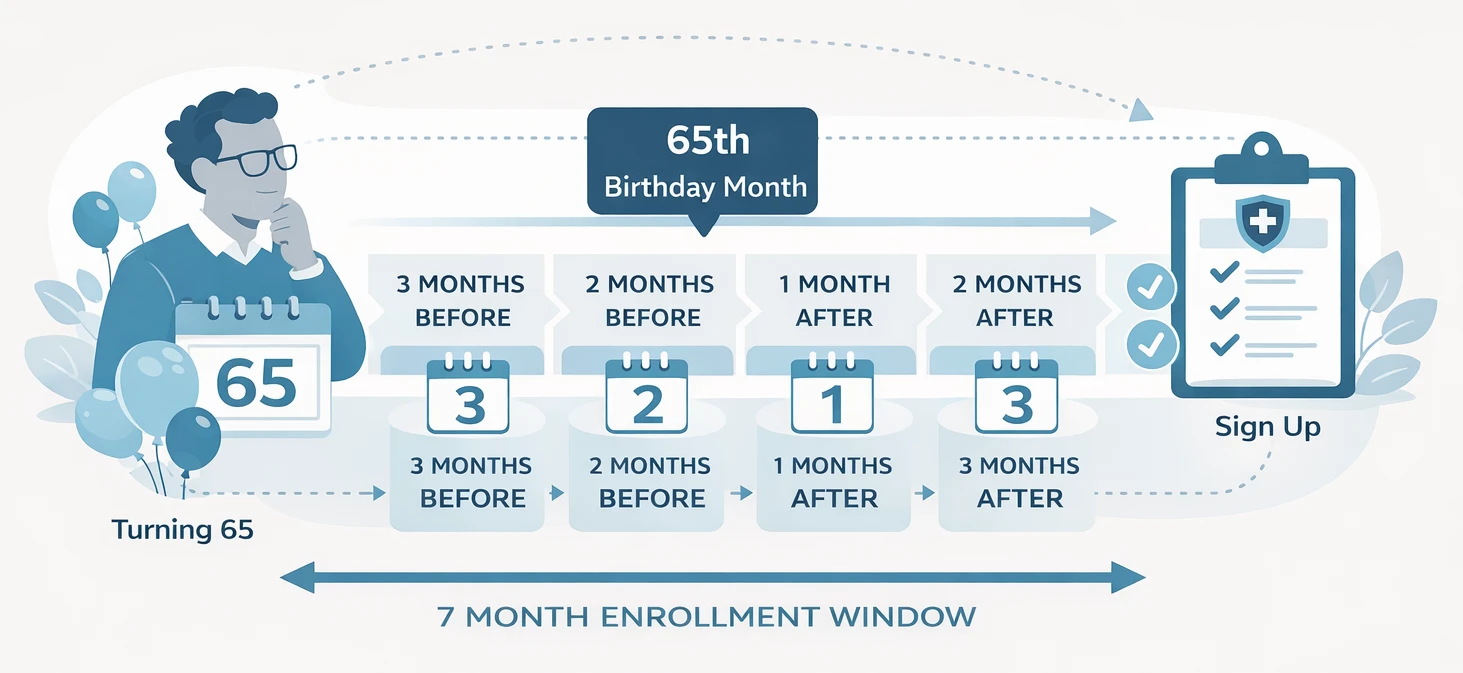
Your first opportunity to enroll in Medicare is called the Initial Enrollment Period (IEP). This is a 7-month window that begins 3 months before your 65th birthday, includes your birthday month, and continues for 3 months after. During this time, you can enroll in Medicare Parts A and B, as well as additional coverage options like Medicare Supplement, Medicare Advantage, or Part D prescription drug plans. Planning ahead for this period is important to avoid gaps in coverage and potential late enrollment penalties.
Important Note: The General Enrollment Period is not a safety net for missing your Initial Enrollment Period. You will be charged a late penalty, and your coverage won’t begin until July 1.
General Enrollment Period
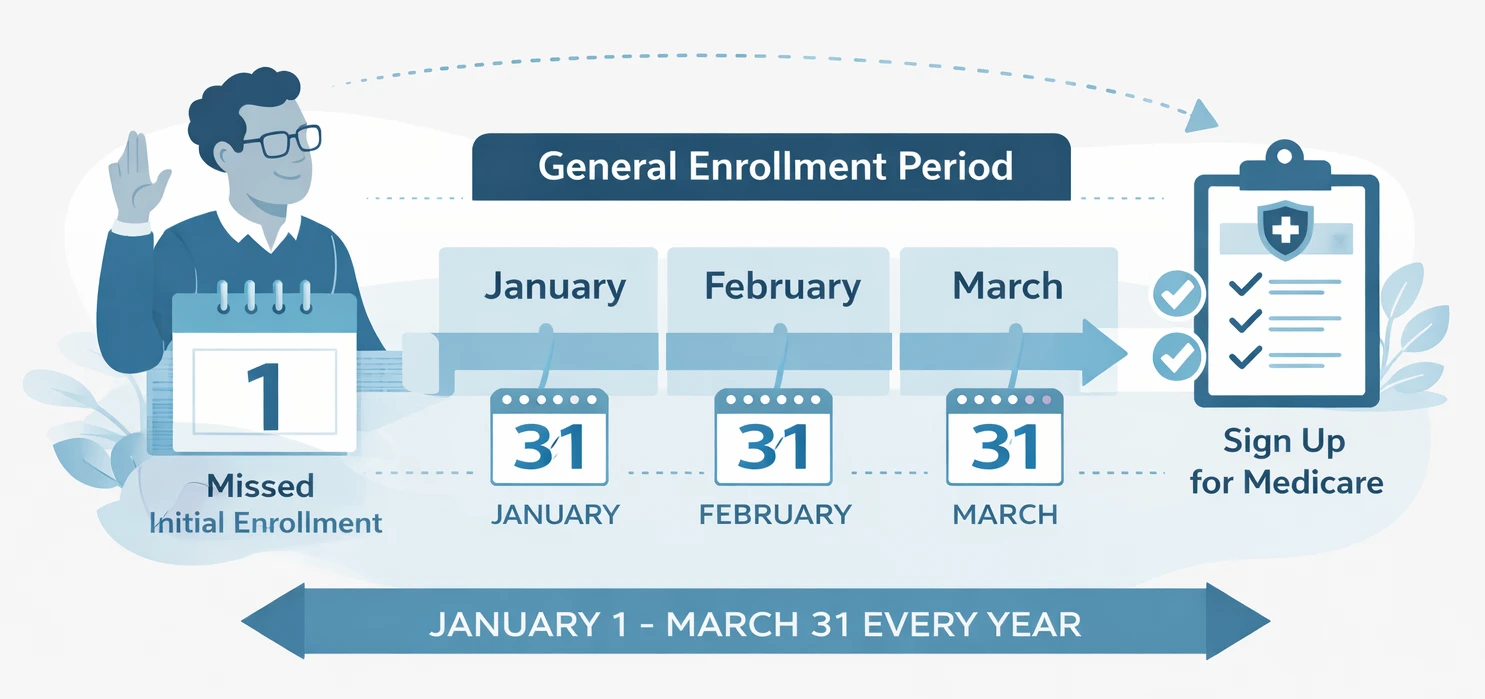
If you miss your Initial Enrollment Period, you still have another opportunity to sign up during the General Enrollment Period, which runs each year from January 1 through March 31. During this time, you can enroll in Original Medicare and choose additional coverage, such as a Medicare Supplement or Medicare Advantage plan. Keep in mind that your coverage won’t start immediately—it will begin after the month you enroll, and you may also face late enrollment penalties depending on your situation.
Medicare's Annual Enrollment Period (AEP)
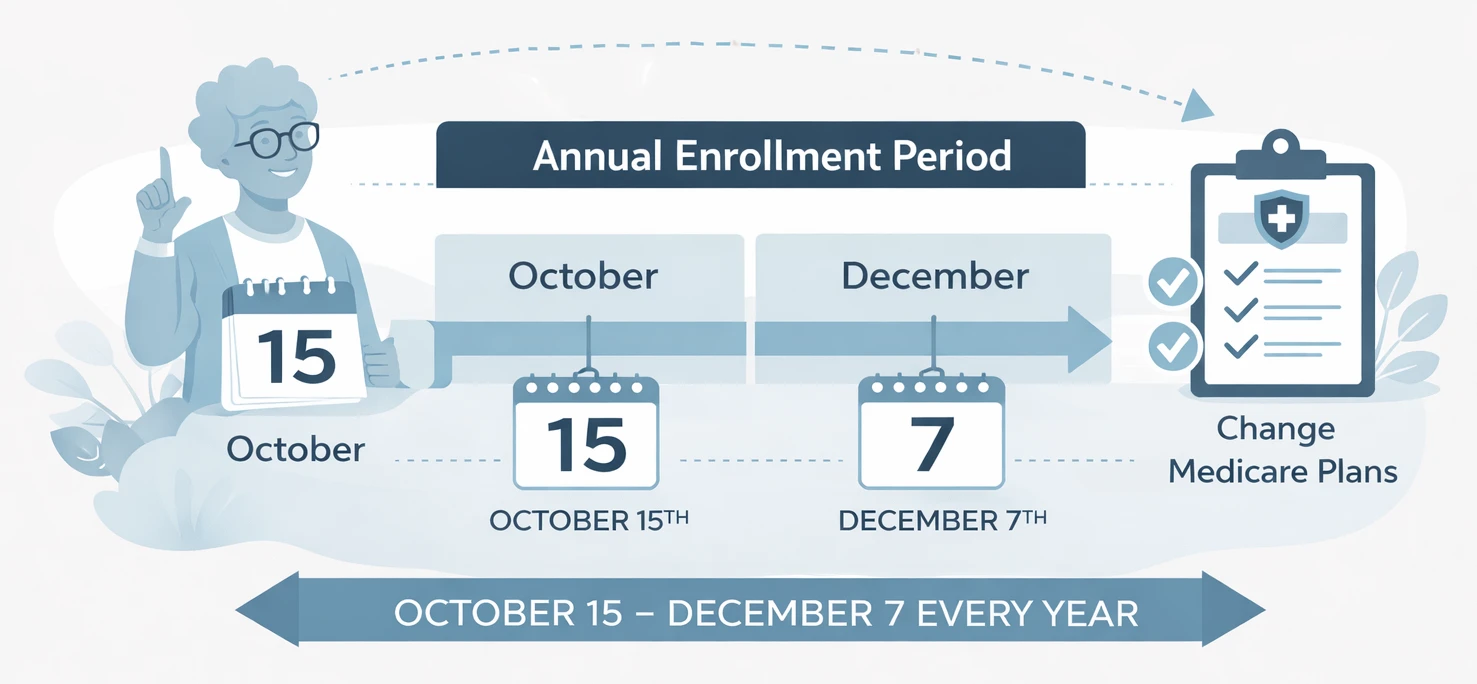
Once you’re enrolled in Medicare, you can review and make changes to your coverage each year during the Annual Enrollment Period (October 15 – December 7). This is your opportunity to adjust your Medicare Advantage (Part C) and Prescription Drug (Part D) plans for the upcoming year. Since this is the busiest time of year, it’s a good idea to connect with your licensed Medicare agent early.
During this time, you can:
- Switch from Original Medicare to a Medicare Advantage plan
- Drop a Medicare Advantage plan and return to Original Medicare
- Change from one Medicare Advantage plan to another
- Enroll in a Part D prescription drug plan
- Cancel your Part D prescription drug plan
- Switch from one Part D plan to another
Special Enrollment Periods
In certain situations—such as moving or losing employer coverage—you may qualify for a Special Enrollment Period (SEP). This allows you to make changes to your Medicare plan outside of standard enrollment windows. Each SEP has specific time limits, often beginning when you notify your plan or when the qualifying event occurs. For example, moving to a new area where your current plan isn’t available may make you eligible for a Special Enrollment Period.
If you believe you qualify, it’s important to act quickly and contact your plan administrator. We can help guide you through the process and ensure you don’t miss your window.
Your Medicare Questions Answered

What is Medicare?
Medicare is a federal health insurance program primarily for people age 65 and older. It also covers certain younger individuals with disabilities or specific medical conditions. Medicare helps cover hospital care, doctor visits, prescriptions, and other healthcare services.
How do I get started?
The best first step is to schedule a consultation to review your Medicare options. We’ll walk through your situation, answer your questions, and help you find the coverage that fits your needs.
When should I enroll in Medicare?
Most people should enroll during their Initial Enrollment Period, which starts 3 months before your 65th birthday, includes your birthday month, and continues 3 months after. Enrolling on time helps avoid potential late penalties.
What are the different parts of Medicare?
Medicare is divided into four main parts:
-
Part A – Hospital Insurance
Covers hospital stays, skilled nursing facilities, and some home healthcare. - Part B – Medical Insurance Covers doctor visits, outpatient care, preventive services, and medical equipment.
-
Part C – Medicare Advantage
Private plans that combine Part A and B and often include extra benefits. -
Part D – Prescription Drug Coverage
Helps cover the cost of prescription medications.
Does Medicare cover prescription drugs?
Original Medicare (Parts A and B) does not typically cover most prescriptions. You can add Part D prescription drug coverage or enroll in a Medicare Advantage plan that includes drug coverage.
How much does Medicare cost?
Costs vary depending on the coverage you choose. Some parts of Medicare have premiums, deductibles, and copays. Many people receive Part A premium-free, while Part B typically has a monthly premium.
Can I keep my doctor with Medicare?
Many doctors accept Medicare, but it depends on the type of plan you choose. Some plans allow you to see any Medicare-accepting provider, while others may use networks.