Understanding Medicare's Options Part A, B, C & D
.
Medicare Part A & Part B?
Original Medicare is broken into two parts, Part A and Part B.
Medicare Part A
When you enroll in Medicare, most people are automatically enrolled in Part A, which covers hospital-related services. This includes inpatient hospital stays, skilled nursing care after a hospital stay, home health care for recovery, and hospice care. In most cases, Part A is premium-free if you’ve paid Medicare taxes while working.
Medicare Part B
Medicare Part B is the medical portion of Original Medicare, covering services like doctor visits, lab tests, screenings, medical equipment, ambulance transportation, and other outpatient care. Unlike Part A, Part B has a monthly premium (based on income), an annual deductible, and typically requires you to pay about 20% of covered services while Medicare pays 80%. If you delay enrolling without other credible coverage, you may face higher premiums. Part B does not cover everything—services like prescription drugs, dental, vision, and hearing are generally excluded—and you must use providers who accept Medicare, or you may be responsible for the full cost.
Medicare Part C
Medicare Advantage (Part C) is a popular option offered by private insurance companies that combines your Part A and Part B coverage into one plan—often with additional benefits.
Medicare Advantage plans are based on your location (county/zip code) and usually operate within provider networks, similar to an HMO or PPO.
While many plans offer lower monthly premiums, you’ll still have copays or coinsurance for services, depending on the plan you choose. In some cases, these out-of-pocket costs may be lower than Original Medicare.
These plans typically include:
- Hospital and medical coverage (Parts A & B)
- Prescription drug coverage (in many plans)
- Extra benefits like dental, vision, and hearing
Is It Right for You?
If you’re looking for a bundled, all-in-one plan with additional benefits, a Medicare Advantage plan could be a strong option to consider.
Medicare Part D
Medicare Part D is an optional prescription drug plan offered through private insurance companies that helps cover the cost of medications. Enrolling when you first become eligible is important to avoid coverage gaps and potential late enrollment penalties. With Part D, you can access prescription drugs at a more affordable cost and gain protection against high expenses if you require costly medications.
Your Medicare Questions Answered

What is Medicare?
Medicare is a federal health insurance program primarily for people age 65 and older. It also covers certain younger individuals with disabilities or specific medical conditions. Medicare helps cover hospital care, doctor visits, prescriptions, and other healthcare services.
How do I get started?
The best first step is to schedule a consultation to review your Medicare options. We’ll walk through your situation, answer your questions, and help you find the coverage that fits your needs.
When should I enroll in Medicare?
Most people should enroll during their Initial Enrollment Period, which starts 3 months before your 65th birthday, includes your birthday month, and continues 3 months after. Enrolling on time helps avoid potential late penalties.
What are the different parts of Medicare?
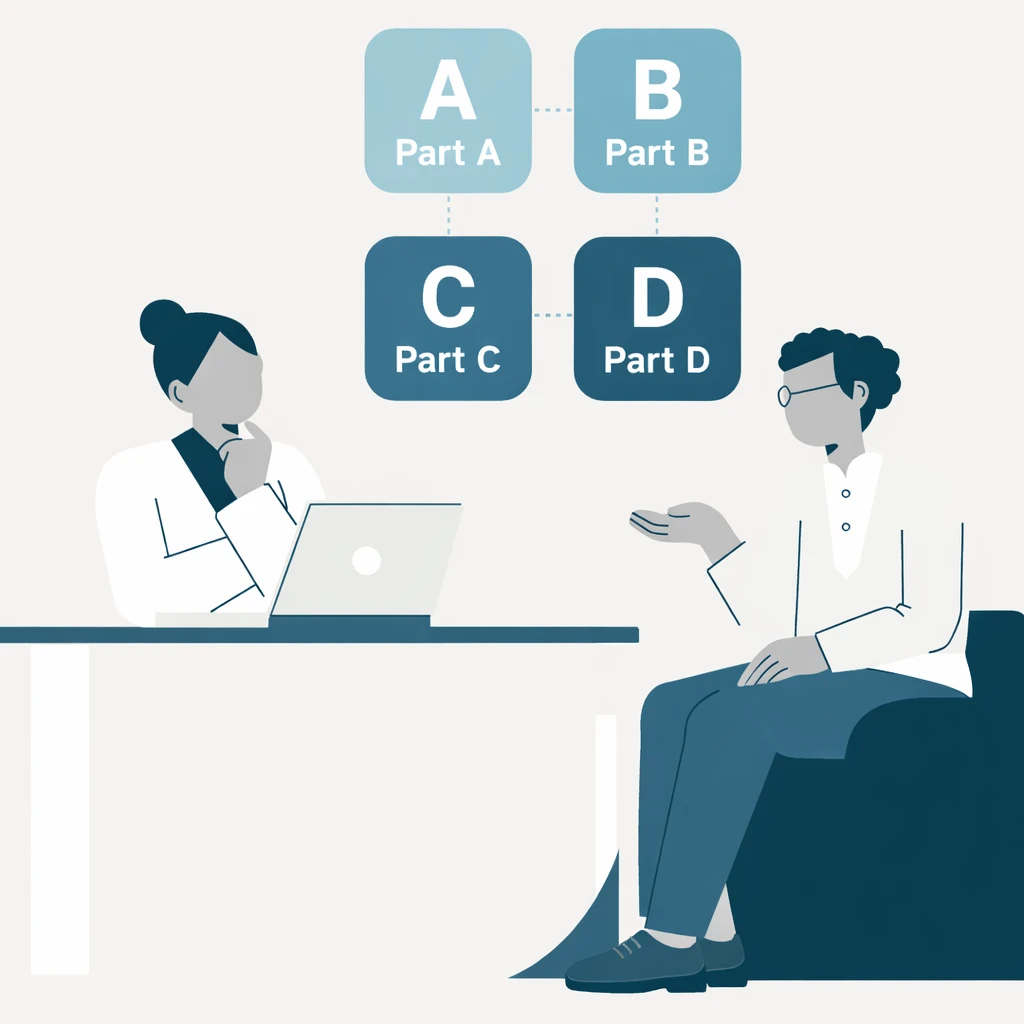
Medicare is divided into four main parts:
-
Part A – Hospital Insurance
Covers hospital stays, skilled nursing facilities, and some home healthcare. - Part B – Medical Insurance Covers doctor visits, outpatient care, preventive services, and medical equipment.
-
Part C – Medicare Advantage
Private plans that combine Part A and B and often include extra benefits. -
Part D – Prescription Drug Coverage
Helps cover the cost of prescription medications.
Does Medicare cover prescription drugs?
Original Medicare (Parts A and B) does not typically cover most prescriptions. You can add Part D prescription drug coverage or enroll in a Medicare Advantage plan that includes drug coverage.
How much does Medicare cost?
Costs vary depending on the coverage you choose. Some parts of Medicare have premiums, deductibles, and copays. Many people receive Part A premium-free, while Part B typically has a monthly premium.
Can I keep my doctor with Medicare?
Many doctors accept Medicare, but it depends on the type of plan you choose. Some plans allow you to see any Medicare-accepting provider, while others may use networks.